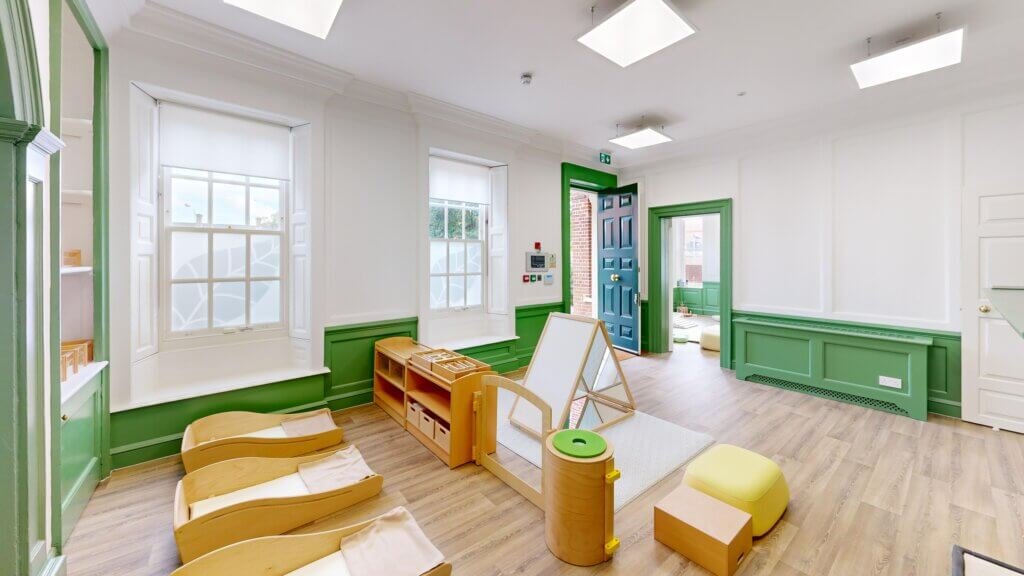
In working with Canopy Nurseries, we were asked to help plan and furnish their rooms in a way that reflected their brand and stayed practical and flexible for everyday use. With set budgets across each site, the focus was on adaptable pieces that children and staff can use in different ways, without prescribing a fixed style of play or teaching.
Planning the Rooms
Based on the floor plans and the age groups in each room, we looked at how to maximise play and learning opportunities within each space. We considered the types of activities the rooms could support and how the layout would work alongside different curriculum needs. Furniture that could be used in more than one way was prioritised, rather than pieces tied to a single purpose.
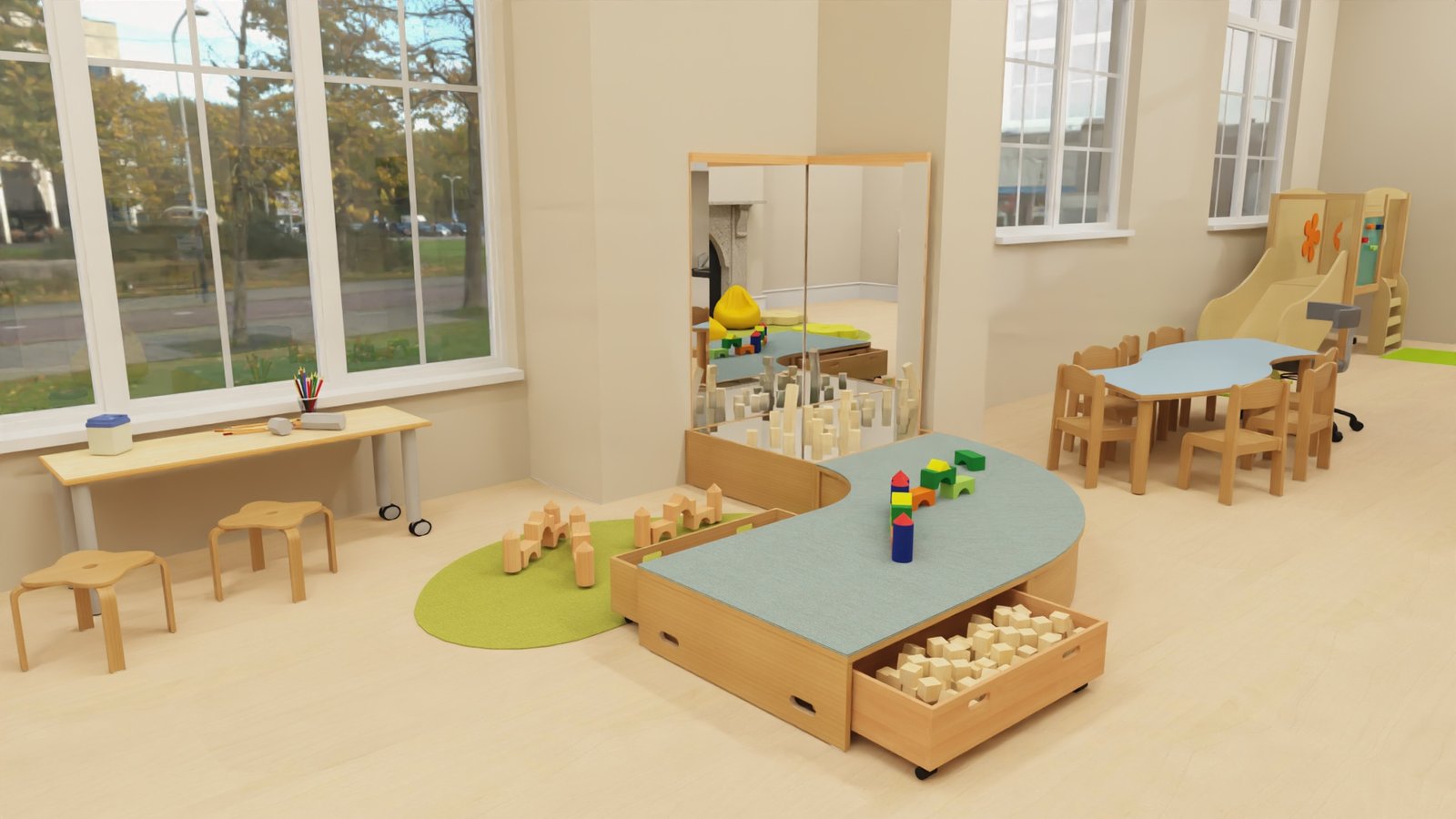
We also paid close attention to materials, choosing items with a strong tactile quality that engage children through sight, touch and movement. Solid wood was selected for its durability and natural warmth, with textured metals added where they could introduce extra sensory interest. Muted colours for laminates and natural rubber surfaces, textured fabrics, all with the intention of creating layers of sensorial complexity. Mirrors were also included to create a sense of depth and to help children observe themselves and their surroundings from different perspectives.
Key Activities
The rooms were planned around activities such as reading, role-play, construction, arts and active play, while still allowing the layout to change when needed.
Early Literacy
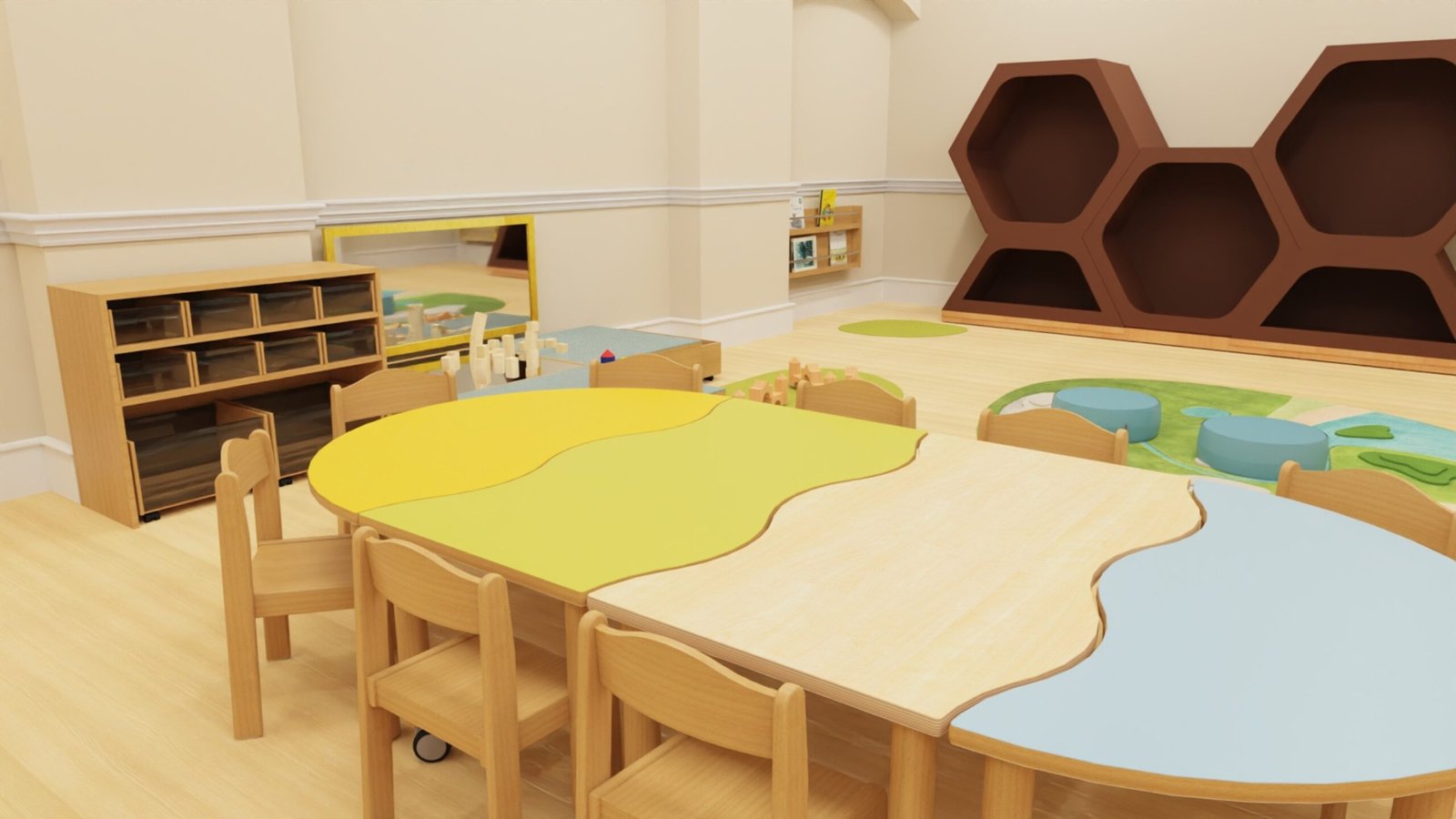
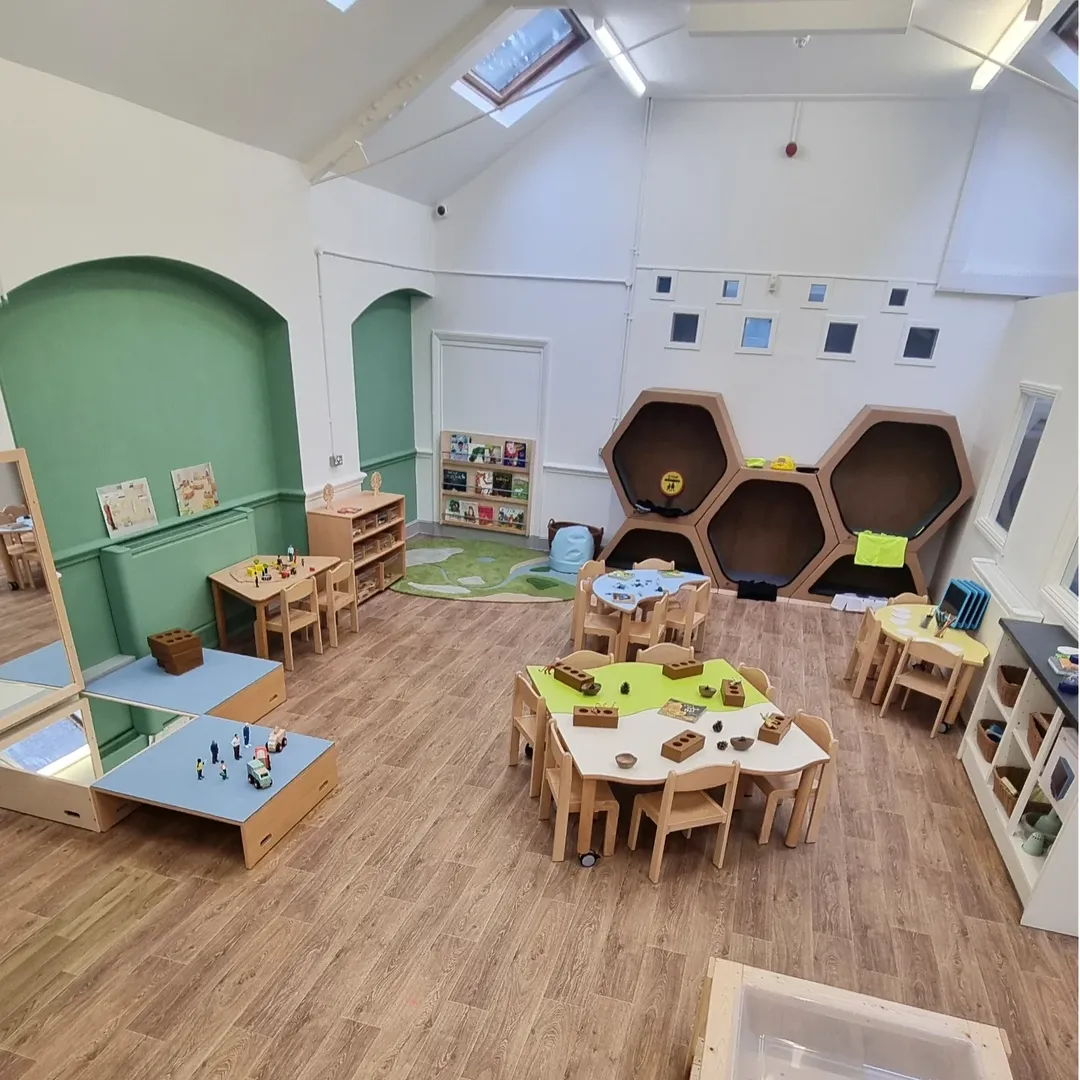
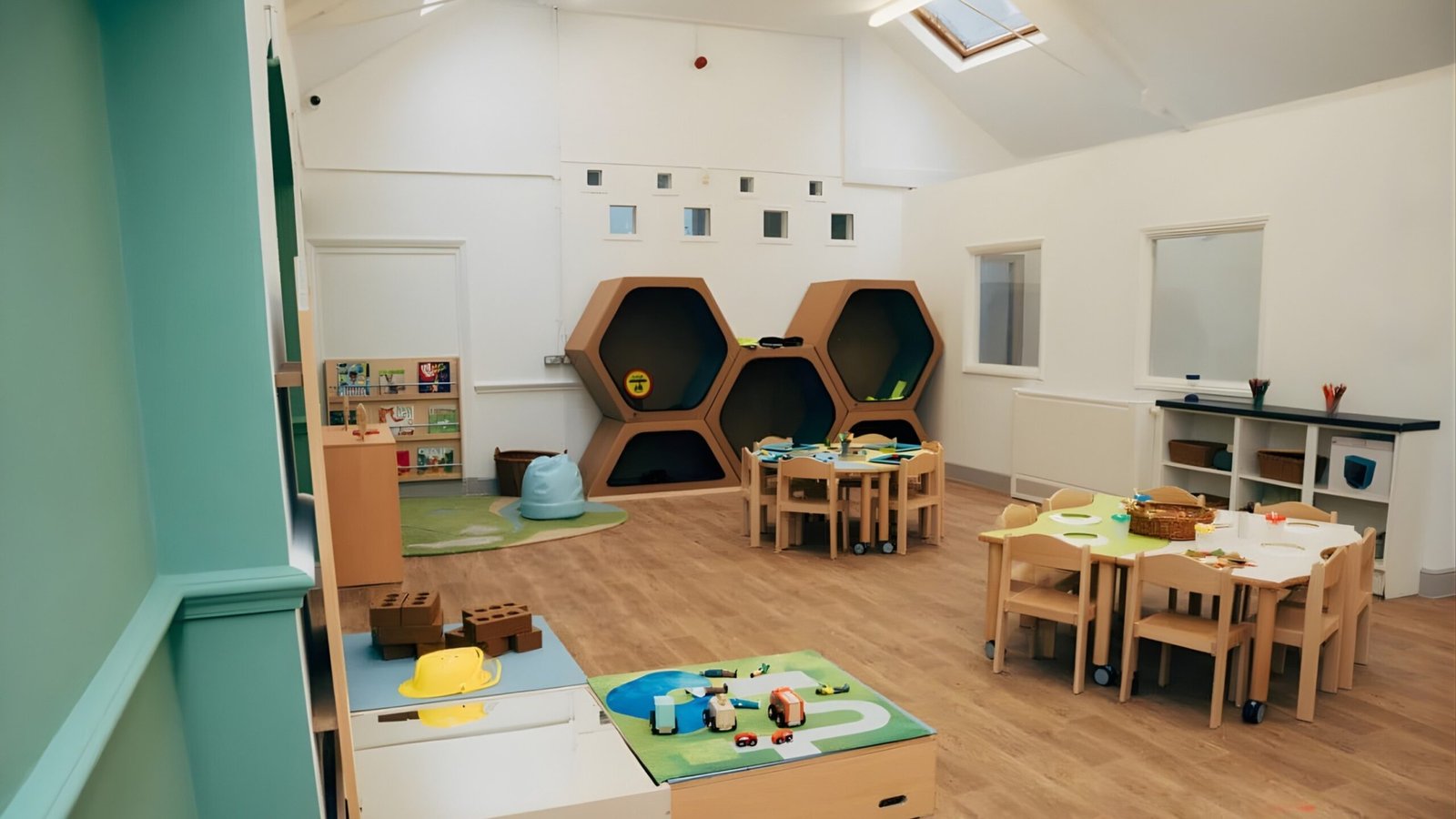
Learning Honeycomb retreat spaces were included to support reading, providing small ‘acoustically cocooned’ enclosed areas where children can sit with books in a comfortable, defined nest, as well as a place for quiet rest or self regulation, maximising vertical space within the room.
Construction & Small World Play
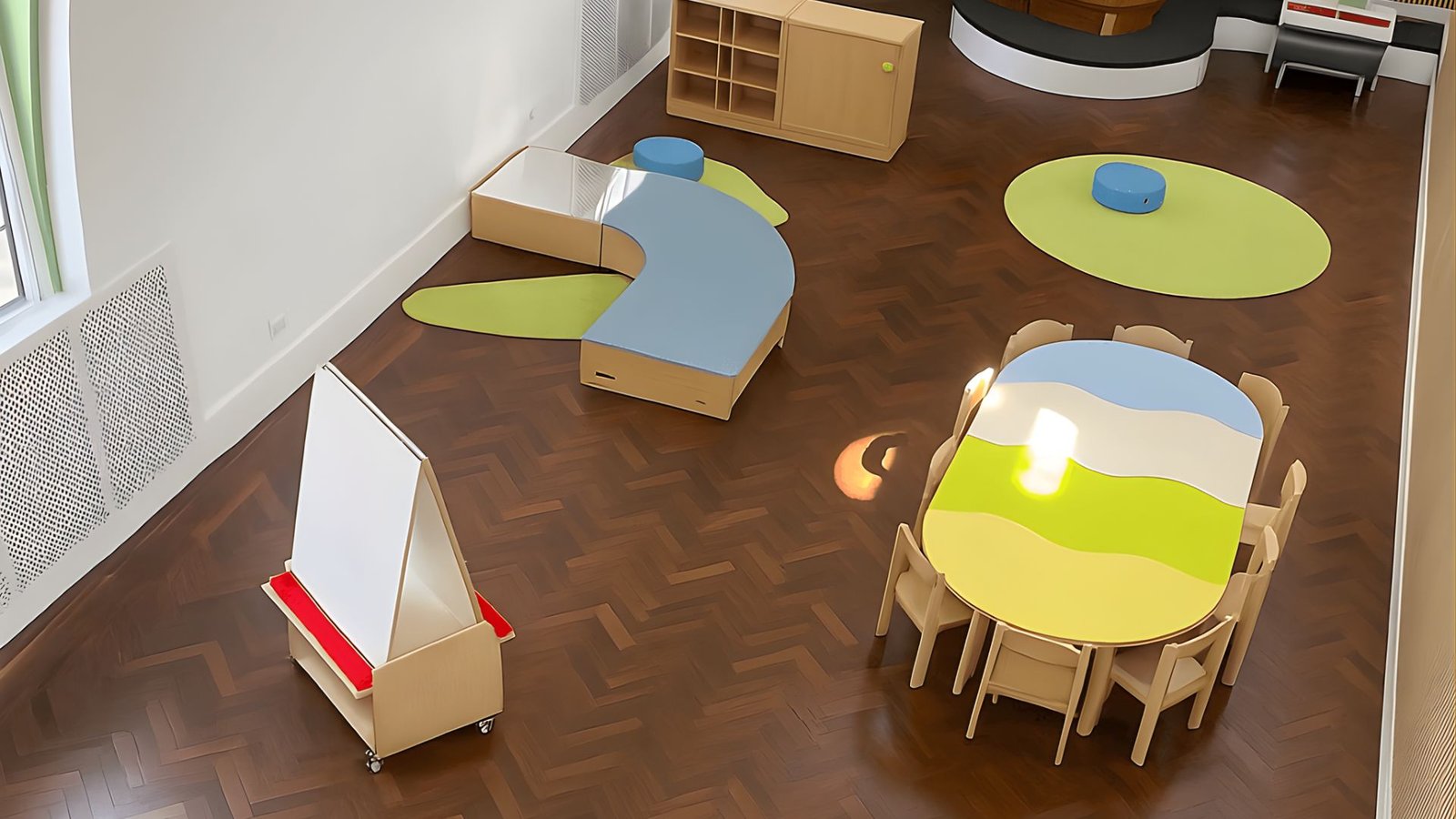
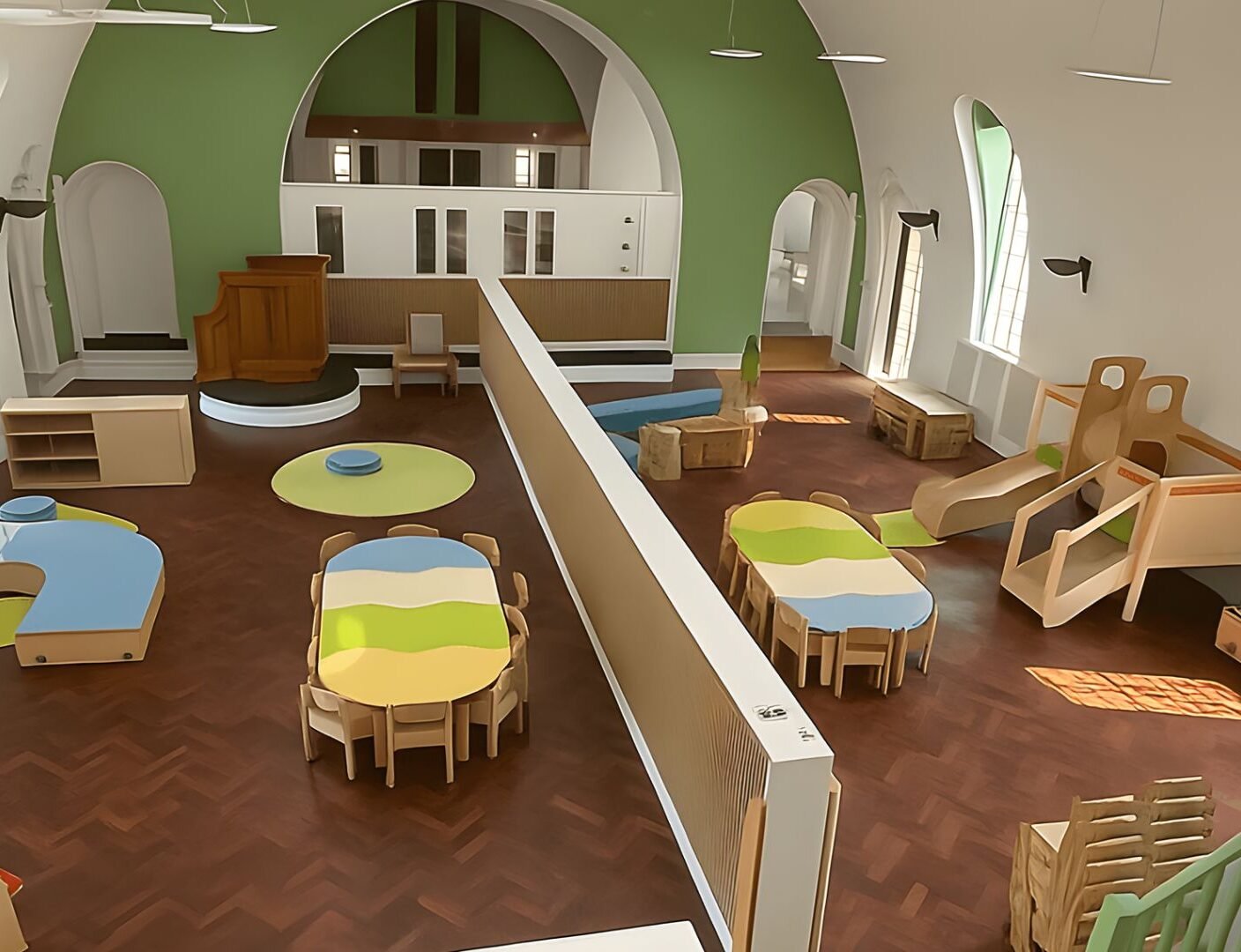
Construction platforms and soft carpeted areas were included to give children places to build, arrange materials and create small worlds. Modular and easy to move and arrange in new configurations. These spaces support early spatial and motor skills while also providing room for simple storytelling and imaginative play, or a raised stage to present block construction and model making.
Active Play
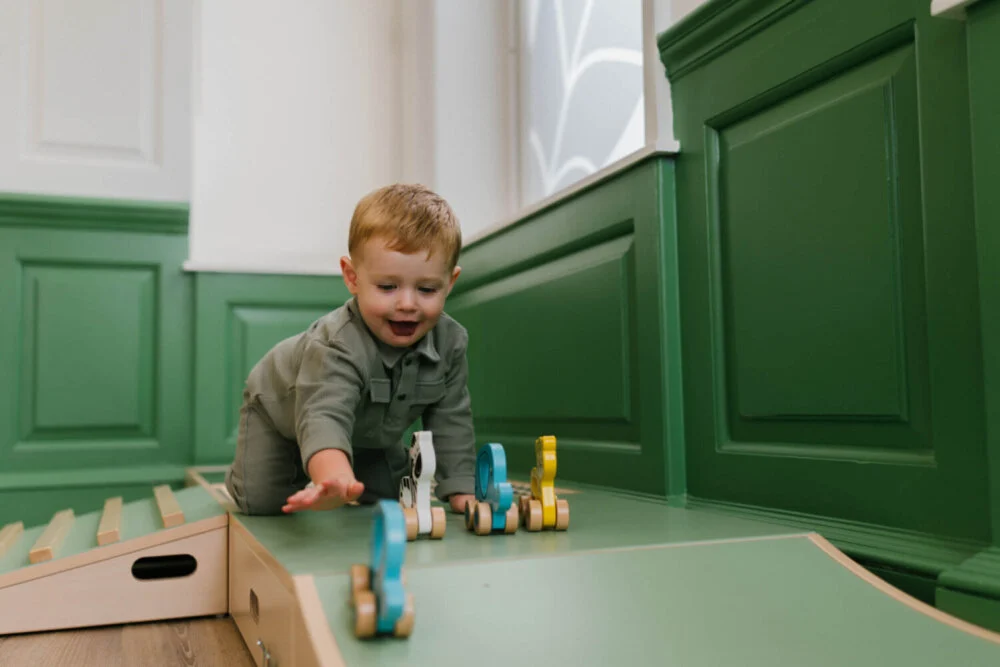
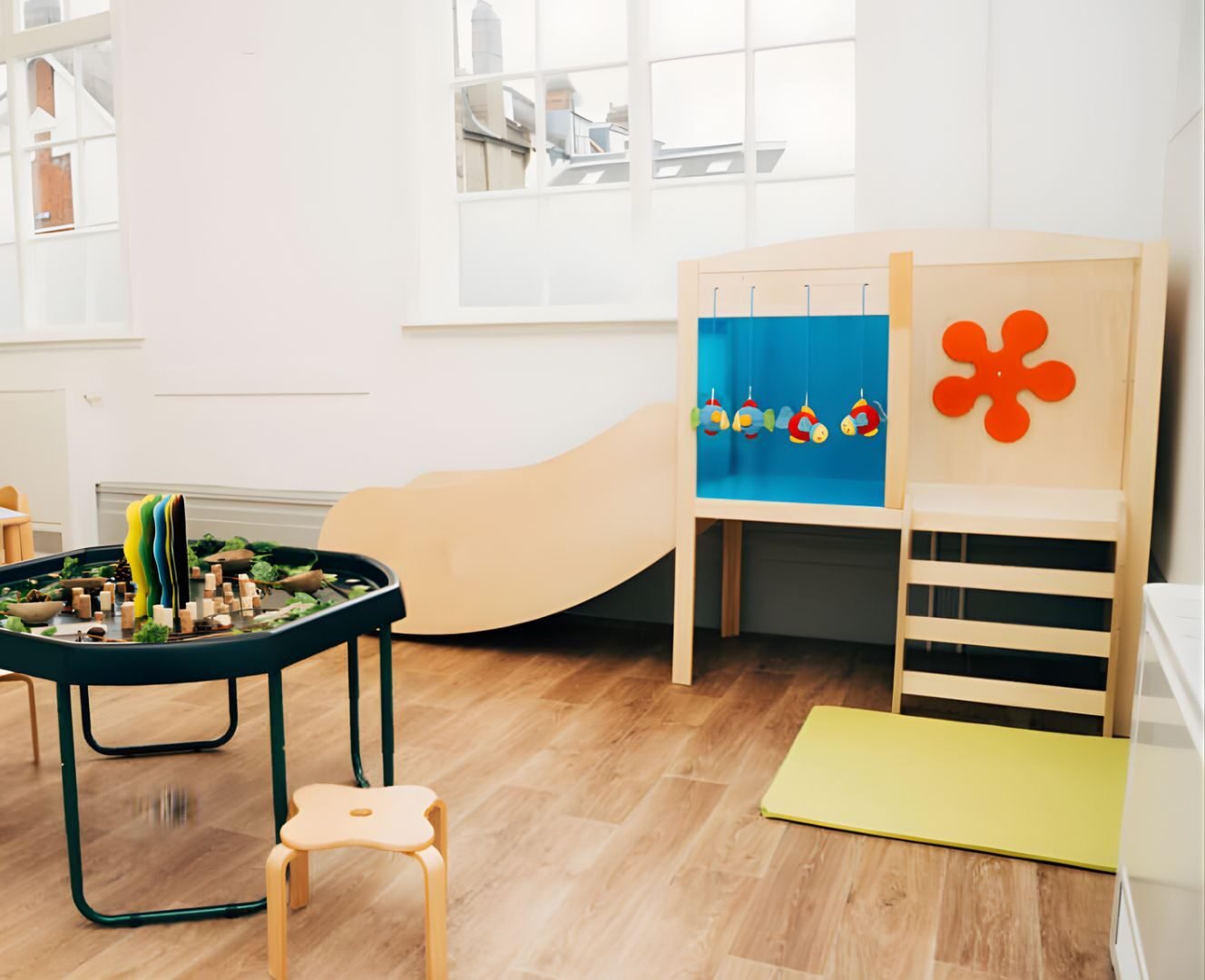
Tobini play levels and low platforms were added to encourage age appropriate active movement and help children develop early balance and coordination.
Role Play Areas
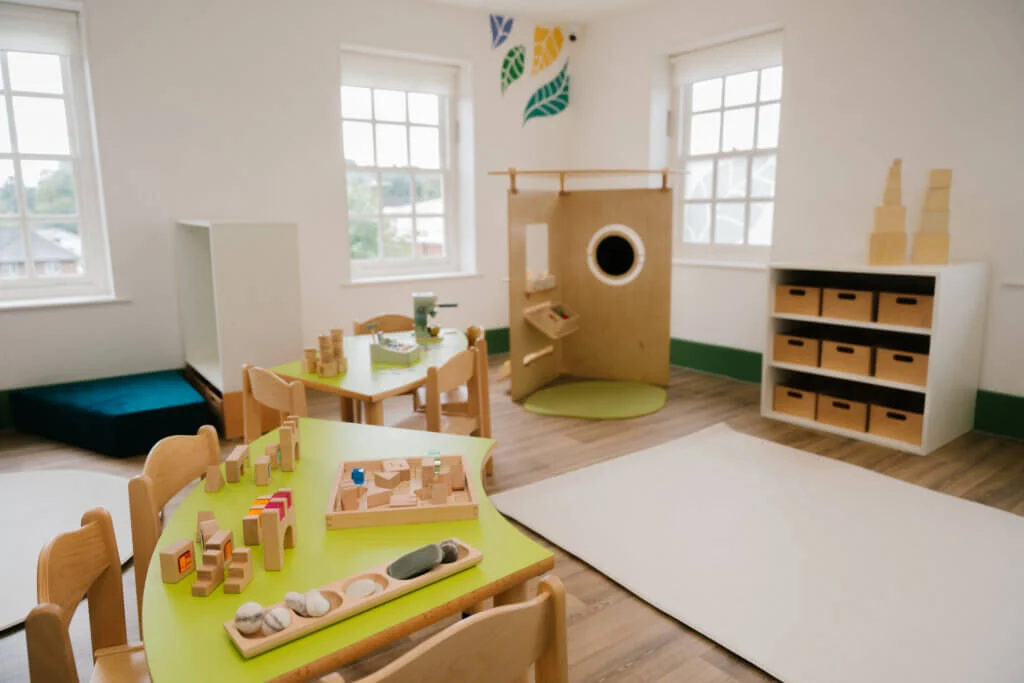
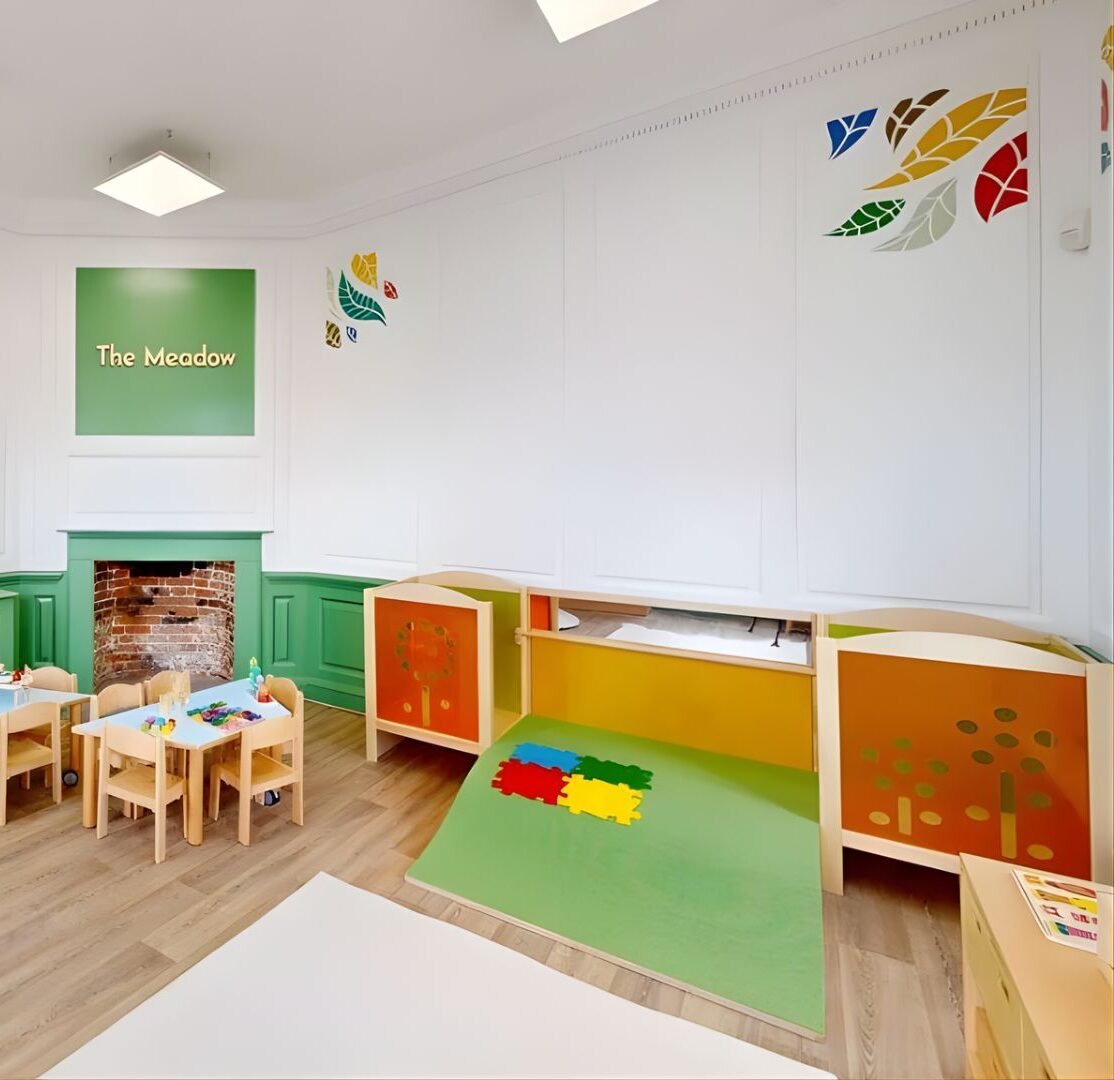
Klax role-play units were selected to support imaginative play. They propose open ended play settings, non-prescriptive, allowing the play to follow children’s ideas rather than a fixed theme.
Art & Creativity
Mobile painting stations, wall easels and scribble tables are used to support a range of creative tasks. These pieces provide open surfaces for drawing and painting, and can be set up to suit different group sizes and activities or as self starter creative destinations.
Group Work & Investigations
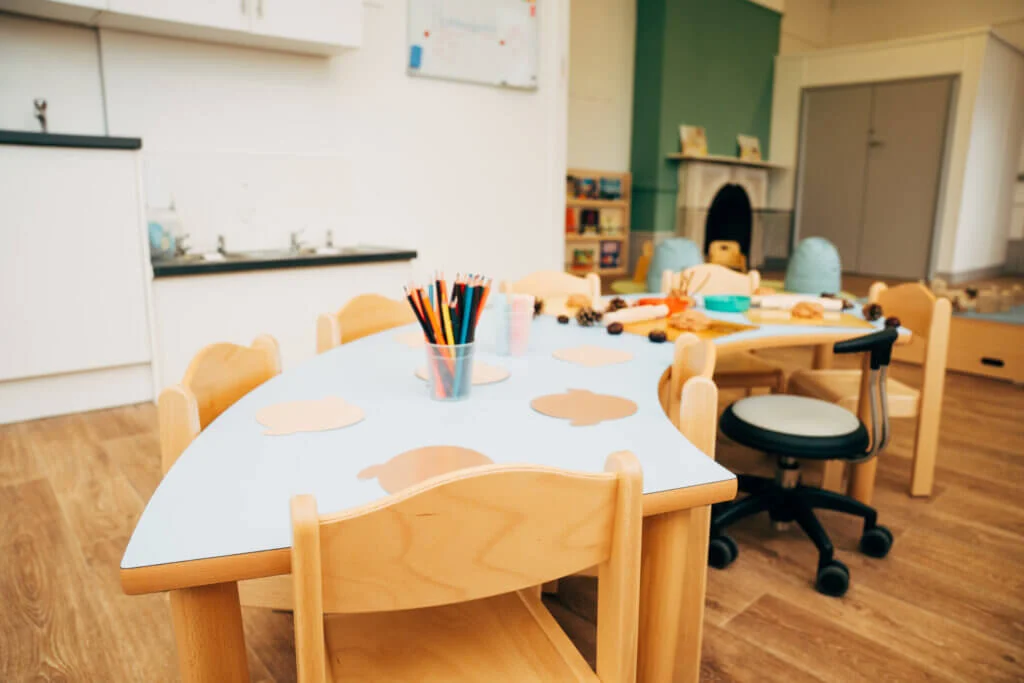
Modular Variable tables were planned to support group projects, early writing and small investigations. They can be combined and repositioned quickly and easily, so the same space can be used for different tasks throughout the day.